How to Become Faster at Times Tables
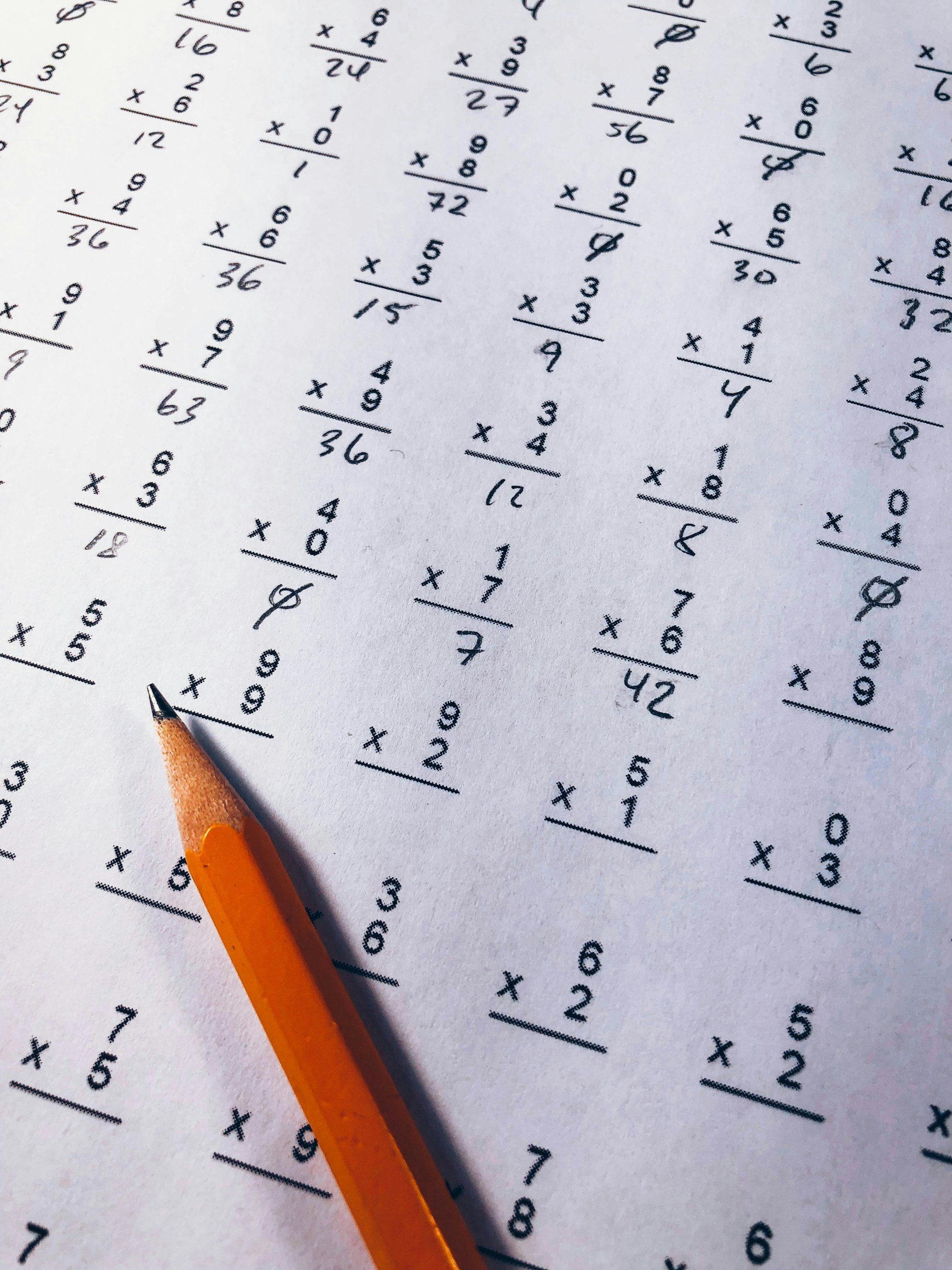
Mastering times tables isn’t just about getting better at math drills—it builds the foundation for almost every math skill you’ll use later: fractions, algebra, percentages, ratios, and even everyday problem-solving. Becoming faster at multiplication is completely doable with the right approach.
Below is a comprehensive, easy-to-follow guide packed with proven strategies to help you boost both accuracy and speed.
1. Understand Before You Memorize
Speed starts with clarity. If multiplication still feels like random numbers to memorize, your brain works harder and slows you down.
A few foundational ideas help your brain "lock in" the tables:
Multiplication is repeated addition (3 × 4 is 4 + 4 + 4).
The commutative property saves time (6 × 8 is the same as 8 × 6—know one, you know both).
Patterns exist everywhere in the tables (like the 9s trick, doubling patterns for 4s and 8s, or the even/odd structure).
Understanding reduces memorization load by at least half—speed naturally increases.
2. Break the Tables Into “Easy Wins”
Some tables are naturally easier. Mastering them first builds confidence and frees mental space:
The easy sets:
1s: The number stays the same.
2s: Just double the number.
5s: Always end in 0 or 5.
9s: Use digit-sum patterns (9 × 7 = 63 → 6 + 3 = 9).
The medium sets:
3s, 4s, 6s: Rely on skip-counting or doubling strategies.
8s: Double three times (x2 → x4 → x8).
The tough ones (focus points):
7s & 8s: Almost everyone struggles here. Once you master these, everything else feels easier.
3. Use Micro-Practice, Not Marathon Sessions
The biggest mistake people make is cramming.
Multiplication membranes don’t build through long sessions—they build through frequent, tiny repetitions.
Use:
5–10 minutes a day
Focused bursts (one table at a time)
Tools like flashcards or quick timed drills
Consistent micro-practice improves recall speed, which is the secret to mental math fluency.
4. Leverage Patterns, Tricks, and Shortcuts
Certain mental shortcuts make multiplication dramatically faster:
The 9s pattern:
Multiply 9 × n
Digits sum to 9
Example: 9 × 4 = 36 (3 + 6 = 9)
The 4s pattern:
Double → double again
6 × 4 = (6 × 2) × 2 = 12 × 2 = 24
The 6s & even numbers:
Half then multiply
6 × 8 = 3 × 16 = 48
(Doesn’t work for all, but helps once you’re more fluent)
Square numbers anchor hard combos:
If you memorize:
6 × 6 = 36
7 × 7 = 49
8 × 8 = 64
It makes the nearby facts easier to retrieve.
5. Make It Visual
Most people learn faster when they can see numbers, not just hear or recite them.
Try:
Multiplication charts
Color-coded fact families
Dot arrays showing repeated groups
Apps that use visuals + speed drills (e.g., Reflex Math, Times Tables Rock Stars)
Visualization shifts multiplication from “random facts” to patterns your brain recognizes instantly.
6. Use Gamified Practice (Motivation Hack)
Games create repetition without boredom.
Some ways to gamify practice:
Beat-your-best-time challenges
Online games with increasing difficulty
Flashcard races with friends or siblings
Reward systems (stickers, points, small prizes)
When practice feels like a game, speed improves naturally because motivation goes up.
7. Focus on the Facts You Keep Getting Wrong
Everyone has “sticky” problems—numbers that slow you down every time.
Make a list of:
The problems you miss
The ones you answer slowly
The ones you avoid
Then drill only those for 2–3 minutes a day.
This targeted approach skyrockets speed because you eliminate your weaknesses instead of rehearsing what you already know.
8. Test Yourself With Time Pressure (But Only After You’re Ready)
Once you’re comfortable with the tables:
Set a 1-minute timer
See how many facts you can answer quickly
Repeat 2–3 times a week
Your brain starts retrieving multiplication facts automatically, not by calculation. This is where true speed comes from.
9. Keep Multiplication in Real-Life Contexts
Practice feels more meaningful when tied to real situations:
Counting items in groups
Doubling recipes
Figuring out repeated costs (like multiple tickets, snacks, or objects)
Mental math while shopping
The more your brain sees multiplication in everyday life, the faster retrieval becomes.
10. Stay Consistent — Speed Builds Quietly Over Time
You don’t notice improvement day-to-day, but after:
Two weeks → faster recall
One month → confidence rises
Three months → multiplication becomes automatic
Speed isn’t from being “good at math”—it’s from small, consistent practice.
Final Thoughts
Becoming faster at times tables isn’t about memorizing hundreds of facts at once. It’s about learning patterns, strengthening recall, and using smart practice techniques. With just a few minutes each day, anyone can develop rapid, confident multiplication skills. I would love to help you improve your math skills. Reach out today! ~Lucas